Barack Obama wore only grey or blue suits during his presidency because, as he put it: “I don’t want to make decisions about what I’m eating or wearing. Because I have too many other decisions to make.” Mark Zuckerberg owns twenty identical grey t-shirts. Steve Jobs never deviated from his black turtleneck.
By the time you reach your desk in the morning, you have already spent half your cognitive capacity on things that do not actually matter. This is why you can execute a complex work task at 9am but cannot decide what to make for dinner at 6pm.
Here are the five friction points quietly draining you, and the quiet fixes worth trying.
Problem One: Morning Decision Fatigue
The daily drain: You wake up already tired and immediately start choosing. Which clothes, which breakfast, which order to do things, whether to check your phone, which task to tackle first. Your brain is making dozens of micro decisions before it is even properly awake. By the time you reach your desk, half your decision making capacity is already spent on things that genuinely do not matter.

 sia.bartrum@gmail.com
Track this for even a week and the pattern becomes embarrassing. The mornings you spend ten minutes choosing your outfit leave you noticeably more irritable by 10am. You arrive at work feeling like you have already burned through hours of energy, and all you did was get dressed and eat breakfast.
The one fix: Make your morning exactly the same for five days straight
Same drink. Same breakfast. Same order of getting ready. Same time you leave. If choosing an outfit exhausts you, wear the same thing or rotate between two options. Not forever, just for one week whilst your brain learns it does not need to be alert for breakfast.
Do this tonight: Decide tomorrow’s morning sequence. Write it down if that helps. Clothes laid out, breakfast decided, same mug on the bench. When you wake up, follow the script without thinking about it.
What shifts:
- You arrive at work with more capacity for decisions that actually matter
- Mornings stop feeling like the first battle of the day
- Your nervous system stays steadier because it is not on alert from the moment you open your eyes
Look, this sounds absurd. “Just wear the same thing” feels like advice for people who have genuinely given up. But week two of the same morning routine, you stop hitting snooze. Not because you became disciplined overnight, but because getting up stopped feeling like stepping into immediate overwhelm.
Aspinal A5 Refillable Luxury Journal
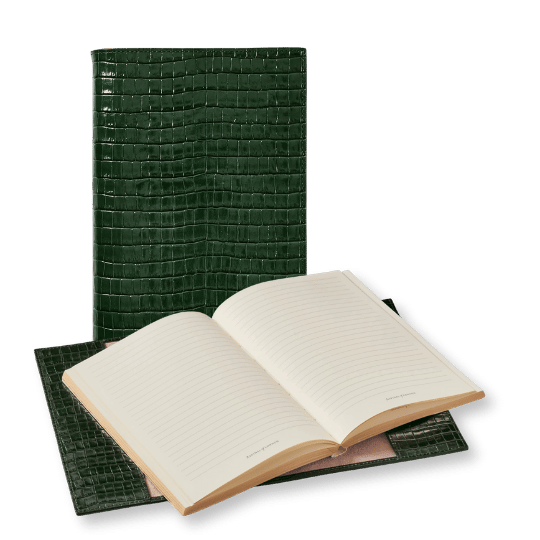
Script tomorrow’s morning tonight. One less decision before your eyes are even open.
GREy Velour Bathrobe Grey with belt

Same robe every morning. One less decision before coffee. Your uniform for the first hour.
West Elm Color-Blocked Glass Canister

A beautiful vessel for the tiny things you reach for every morning. No rummaging, no searching.
Problem Two: Constant Task Switching
The daily drain: You are never fully in one thing. Email half answered whilst thinking about the next meeting. Dinner cooking whilst mentally drafting a message. Brain in three places, body in none of them. Every switch costs energy, and you are switching dozens of times an hour without even noticing.
Track how long tasks actually take when you do them one at a time versus jumping between them. The gap is significant. We like to think multitasking is efficiency. It is absolutely not.
The one fix: Create a physical marker between tasks
Not a productivity hack, just a simple signal that tells your brain one thing is done and another is starting. That might be a ninety second walk between work tasks. A full glass of water before opening a new tab. Folding one item of clothing before sitting down to dinner.
Your brain stops living in permanent overlap. Tasks feel more contained. You finish things properly instead of leaving twenty threads half pulled.
Do this today: Pick your hardest transition. Work to home, one task to another, awake to asleep. Insert one physical action between them. Stand up and walk to the window. Make tea. Close your laptop and count to ten.
The first time you try this, standing at your window for ninety seconds between tasks feels ridiculous. By day three, you realise you have stopped losing your train of thought mid sentence. By week two, you notice you are finishing tasks faster because you are actually present for them.
Wood Desk Organiser
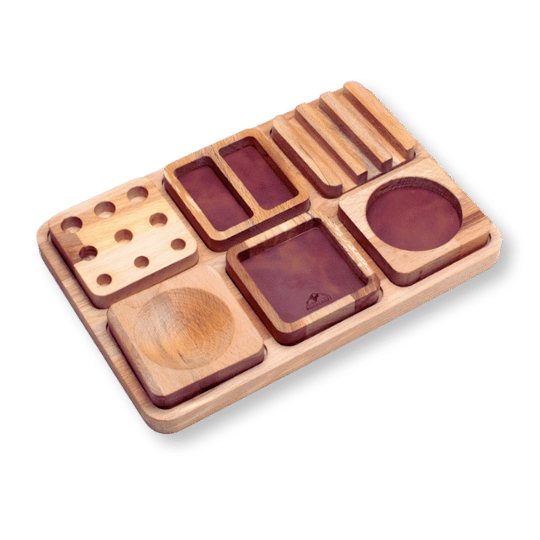
Everything in one place means your eyes stop scanning. Finish one task, then start the next.
Tom Dixon Bell LED Lamp

Dim it between tasks. A visual reset that tells your brain: that is done, this is next. Portable, so it follows you room to room.
J’ai Soif Carafe & Glass

The full glass of water between tasks, made beautiful. Pour, drink, begin again with a clear head.
Problem Three: Work Reactivity
The daily drain: Every email, message and notification gets an immediate response because leaving things unanswered feels unbearable. You spend the day reacting to other people’s urgency instead of focusing on your own work. By afternoon you are exhausted and have completed nothing that mattered.
This one drains most of us without us even noticing. Your brain genuinely cannot distinguish between “urgent” and “someone else wants this now.” So you answer emails at 11pm because your nervous system registers it the same way it would register actual danger.
The one fix: Build in a ten minute delay before responding to anything non urgent
Not a boundary, not a rule you will break by Wednesday. Just a small gap between receiving and responding. Read the message, close it, do one other task, then reply. Let your nervous system settle before you decide what the situation actually needs.
Do this today: When the next non urgent message arrives, read it and then close it. Set a timer for ten minutes. Do something else. Reply when the timer goes off. Notice whether your response is clearer than usual.
What shifts:
- You stop living in other people’s timelines
- Reactivity drops without you becoming unresponsive
- Responses improve because you are writing them from a steadier place
- Work feels more like steering and less like firefighting
The first week of ten minute delays, you will be convinced everything will collapse. Nothing collapses. Half the “urgent” messages resolve themselves before you reply. The other half benefit from you responding with a clearer head rather than whilst your nervous system is activated.
Nordik Leather Valet Tray
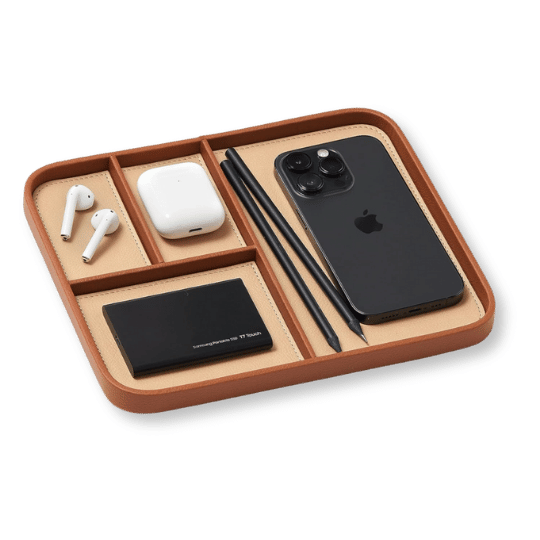
Keys, wallet, watch. One tray by the door. The hallway dump zone, solved. One less “where did I put it” moment.
Teak Mid-Century Desk Clock
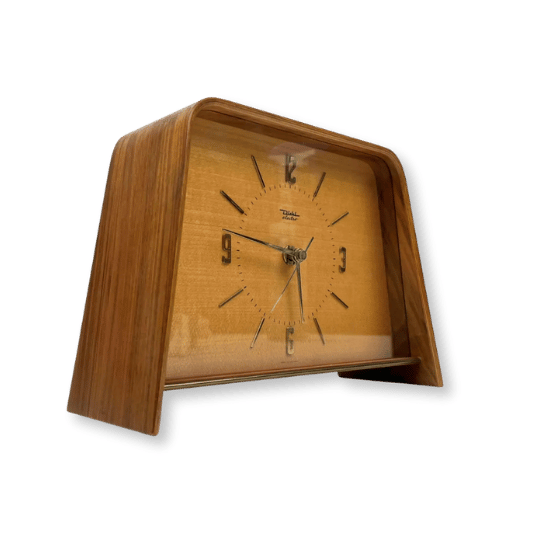
Check the time without touching your phone. Ten minute delay without the temptation to scroll.
Brass iPhone Docking Station
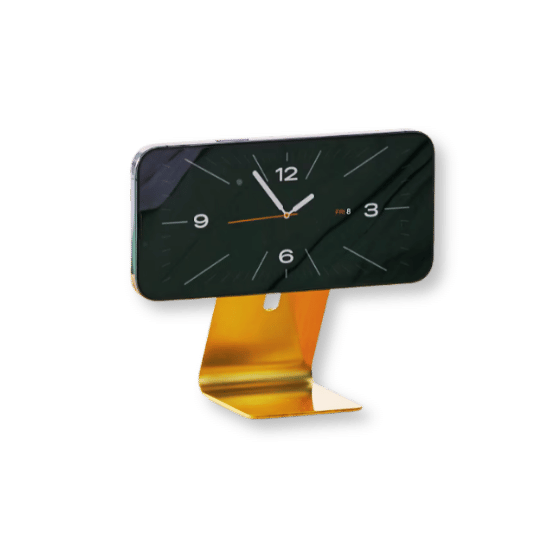
Phone docked, screen visible, hands free. You see the message arrived. You choose when to respond.
Problem Four: Evening Inability to Switch Off
The daily drain: It is 9pm and you are still half on duty. Laptop closed but phone nearby. Brain supposedly relaxing but still checking messages, still planning tomorrow, still in work mode wearing evening clothes. Your body never gets the signal that the day is actually over.
We pride ourselves on being available. Then we realise our evenings feel like waiting rooms. You are present but not really there. Sitting on the sofa but not actually resting. The gap between finishing work and feeling finished grows wider every month.
The one fix: Create one physical threshold ritual that marks the end of being available
Light a candle at the same time each evening. Change into specific clothes you only wear at home. Make one particular drink. The ritual itself does not matter. What matters is that it happens at the same time and your brain begins to recognise it as the threshold between on duty and off.
Evenings feel genuinely separate from work. Your body stops waiting for the next demand. You stop feeling guilty about resting because the threshold ritual gave you permission.
Do this tonight: Pick one simple action and a specific time. 8pm, light the Diptyque candle. 7:30pm, change into linen pyjamas. 9pm, make chamomile tea. Do it tonight, then again tomorrow night, then keep going until your nervous system recognises the pattern.
When you light an Aesop candle at 8pm every evening, your shoulders drop the moment the match strikes because your brain knows what comes next.
It takes about eleven days for this to become automatic. Until then, it feels performative. After that, it feels necessary.
Velvet Short Robe with belt

The clothes you change into become the threshold. Your nervous system learns the signal.
Muuto Ease Portable Lam
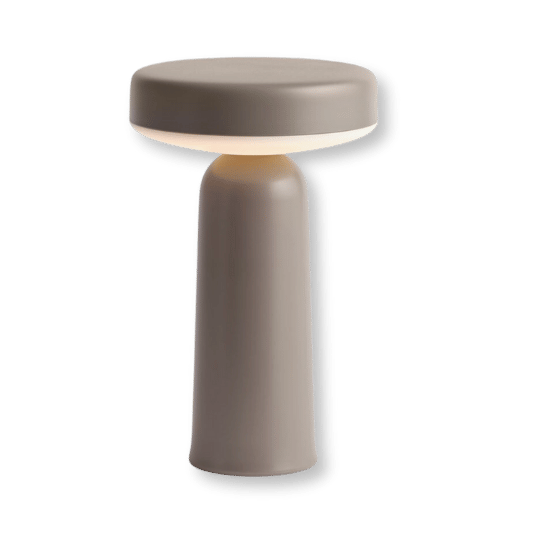
Soft light signalling off duty, no matches needed. Your evening threshold, portable. Comes to the bath too.
Quiet Mind Weighted Pillow
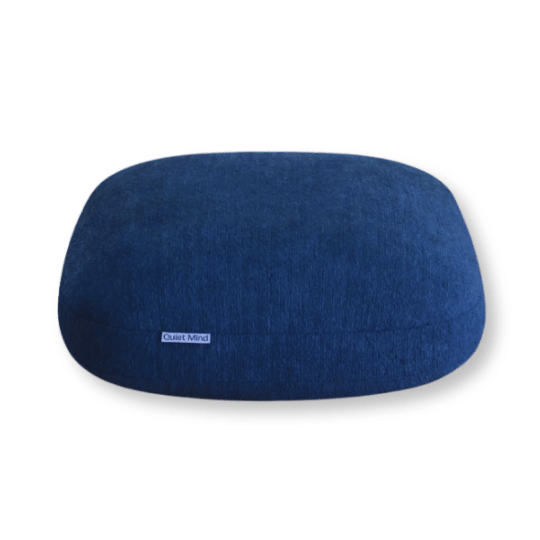
Gentle pressure tells your nervous system the day is done. Permission to stop in physical form.
Problem Five: Home Environment Stress
The daily drain: Your home looks calm but somehow being in it still feels effortful. Surfaces covered in objects that need sorting. Visual noise everywhere your eyes land. Low level clutter that your brain has to process every single time you walk past, even though you stopped consciously noticing it months ago.
This one takes longest to spot because you think your home is already minimal. Then you track where your eyes catch every time you walk through a room. That drawer handle you have to jiggle. That corner where mail accumulates. That shelf you glance at and think “I should deal with that” for the hundredth time. Your brain is processing all of it, constantly.
The one fix: Run a friction audit and remove two things creating daily stress
Walk through your home and notice what makes you tense without realising. That drawer that sticks every single time you open it. Kitchen bench that accumulates objects overnight and never stays clear. Entry hallway corner where everything gets dumped and stays there for weeks.
Pick two friction points and remove them completely. Not reorganise them, but just remove them.
Do this today: Right now, walk through your main living space. Notice where your shoulders tighten slightly. Where your eyes skip over something because acknowledging it feels like adding another task to your mental list. Clear one surface entirely. Remove one source of visual noise. Do not reorganise it, just remove it.
Common friction points to check:
- Drawer that catches every time you open it
- Kitchen bench that never stays clear
- Bedside table piled with objects you never use
- Bathroom counter covered in products you barely touch
- Entry hallway where everything gets dumped
When you clear your bedside table completely and leave only three objects (lamp, book, water glass), you cannot explain why this changes your sleep quality. But it does. Your eyes have one less surface to scan before settling. Your brain has one less area to process as “needs attention.”
Basketweave Lacquer Jewelry Box

Earrings, rings and necklaces off the bedside table, into velvet compartments. One less surface for your brain to scan.
green wolf sun Murano Glass Portable Light

When you clear your bedside table to three objects, make one of them extraordinary. Art that glows.
Towel Warmer Bucket with 24H Delay Timer

Programmable, so that last night’s decision becomes this morning’s warm towel. Your bathroom works for you.
The Thing That Holds It All
These five fixes work because they reduce cognitive load without requiring you to transform into someone else. You are not adding rituals or optimising rest. You are removing friction so your brain has less work to do.
The pattern:
- Predictable mornings mean fewer decisions before you are even properly awake
- Physical transitions give your brain clear boundaries between tasks
- Response delays reduce reactivity without making you unresponsive
- Threshold rituals create genuine separation between work and rest
- Friction audits mean your home stops quietly draining you
The people with boring routines simply figured this out earlier. They built lives that do not require constant effort just to function.
Start With One
Pick the problem that makes you most tired:
Morning chaos → Same sequence for five days Task switching → One physical marker between activities Work reactivity → Ten minute delay before responding Evening duty mode → One threshold ritual at the same time daily Home environment stress → Remove two friction points this week
Apply one fix this week. Not all five, just one. Let your brain learn the new pattern before adding anything else.
Most people start with the morning routine because it feels least intimidating. Three weeks in, they add the evening candle. Four months later, baseline exhaustion has halved without doing anything remotely impressive.
Rest stops being something you have to earn or perform. It becomes the structure that makes everything else easier.