
There is a certain kind of crime scene that never makes it into detective novels, the one that takes place in our living rooms at 21:47. You know, that one where dishes are in the sink, a half-folded pile of laundry on the chair, two work emails still flagged. You lie down on the sofa anyway, and within thirty seconds the inner prosecution arrives: you cannot rest while the kitchen looks like that, it says. Scrolling your phone at lunch does not count as work, it nags. And to hammer its point home, “if you stop now you will never catch up” it threatens. While we pretend to lie down, our minds are actually up and pacing with a clipboard and a list of things we have not completed, have failed at, and have been disappointing at.
Here is the thing, though: you think you are bad at self-discipline, but the truth is you are extremely good at it. You have built an internal supervisor so efficient that it follows you onto the sofa, into the bathroom and under the blanket, and this is also the piece of the puzzle that most wellness language politely ignores.
The voice you learned (not the one you were born with)
Guilt is not a weather pattern. It is a voice you learned somewhere between childhood, school and the first job, when many women pick up the same script: a good woman is useful and pleasant and does not leave mess, unanswered messages or disappointed faces in her wake.
Psychologists call that inner supervisor the superego, and when you lie down while there is still visible work in the room, that voice panics. Not because it cares about your wellbeing but because it wants control. You are not fighting a lack of bubble baths but dealing with an internal manager who genuinely thinks lying down is career sabotage.
You cannot silence that voice in an evening, but you can start gently ignoring it in small and smart ways.
The gentle delay (or how to stop responding like an emergency hotline)

 sia.bartrum@gmail.com
The pattern you recognise
Most over responsible women answer messages as if they are working on an emergency hotline, you know the drill. Group chats, family texts and colleague requests all get the same immediate attention because the inner logic is simple and deeply familiar: if I respond fast, nobody can accuse me of neglect.
The line that works
Try this instead: “Thanks for thinking of me. Let me check my other commitments and get back to you tomorrow.”
That is all. No autobiography, no apology for existing as a person with limited time and energy.
What actually happens
The first time you send it, your stomach may drop and you will want to add seventeen more sentences. Watch what actually happens though, because most people accept it without question, some forget they even asked, and the world just keeps turning.
The quiet full stop (without the emotional memoir attached)
The thesis you normally write
When you truly cannot take something on, most of us respond with apologies for the state of our week, explanations about childcare, and a confessional paragraph about how awful we feel. By the time you reach your actual point, you are already exhausted.
The shape that works better
Try this: “I will not be able to help this time, but I hope it goes well for you.”
Short, warm and final. No emotional system donation required.
The micro step down (from lead mule to team member)
When opting out is not the option
Some situations genuinely matter, and you may not be willing to opt out entirely. You might, however, be able to opt out of doing absolutely everything, and that counts.
The sentence that redistributes custody
“That sounds important. I can help, but I will need to do it later, or someone else may need to take part of it this time.”
That single sentence moves you from lead mule to team member, and it is allowed to feel strange at first.
Naming the discomfort
The discomfort that follows is not evidence you have done something wrong but evidence that your nervous system is used to over giving. Name it quietly: this is discomfort, not danger.
Who is your model for “good” now?
The inner supervisor in your head is usually built from people you needed approval from in the past, and very few of them were resting much, if we are being honest.

Think of one woman you quietly admire not because she is endlessly productive but because she has ease, presence or clean lines around her time. Maybe she leaves parties when she is ready, replies the next day without anyone becoming outraged, or says “I am going to lie down” and then actually does it. She is not Emily in Paris running on caffeine and charm but someone who treats her own limits as information rather than character flaws.
Ask yourself what you like about the way she moves through the world, and whether you would think less of her if she did fewer things. The answer will be no, and there is your proof. You are allowed to offer yourself the same standard.
If you want a visual anchor and a physical sensation to mark the change
The strategies above work on their own, but some of us need something to hold whilst the nervous system catches up to the new script. Not as solutions but as ceremonial markers that say: this moment is different.
For the gentle
delay

Applied to pulse points when you send that boundary text gives your nervous system a scent signal that setting a boundary is not the same as setting a fire.
For the quiet
full stop

Sounds ridiculous until you are squeezing it whilst typing that boundary text with your other hand, we promise you.
For the micro step down
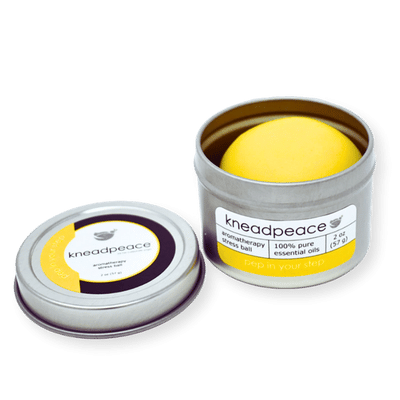
Give you something to do with that discomfort. You squeeze lavender, eucalyptus or peppermint, and it interrupts the spiral whilst the texture gives your hands work that is not refreshing your inbox
For the gentle
delay

Applied to pulse points when you send that boundary text gives your nervous system a scent signal that setting a boundary is not the same as setting a fire.
For staying lying down

Permission made physical. The weight says you are allowed to be here whilst the dishes still exist in the next room.
For staying lying down
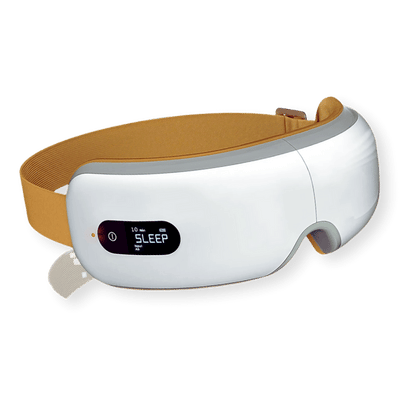
For 15 minutes you cannot do anything productive even if the guilt voice demands it. Your eyes are covered, your temples are being compressed, and the world continues without your supervision.
Staying lying down (the actual practice)
You will not become “good” at boundaries, and that is fine. This is not another skill to master, and you will sometimes still say yes too quickly, lie awake replaying the “no” you finally sent, or regret stepping down when someone else does it badly.
None of this means you have failed. It just means you are rewriting very old rules, and that takes time.
The next time you lie down while the dishes are still in the sink and the guilt voice starts reciting its usual lines, you can try a different response. You can think, “Thank you for your service, but I am not on that contract any more.” Then stay lying down.
Guilt free rest is not a spa weekend or a dramatic resignation. It is fifteen quiet minutes where nothing is required of you, taken on purpose, while imperfect life continues in the next room. It will not make you less caring, but it will make you less depleted, and that is a far more interesting form of rebellion.