
Most gift guides assume the recipient has spare time and spare energy. They suggest a new routine, a new identity, or a new level of discipline. This one works differently.
These edits are designed for real December life. The goal is not transformation. The goal is reducing friction in the moments where people usually run out of capacity. Each chapter offers a small, workable self-care method that fits inside an ordinary day. The products appear at the end of each section as illustrations, because the object is only useful if it makes the behaviour easier.
If you are buying for someone who insists they “don’t need anything,” choose the gift that reduces effort in the exact moment they usually push through.
For the Burnout Perfectionist
Burnout is not a lack of motivation. It is the cumulative cost of operating above capacity while postponing recovery until a mythical “quieter week.” The most reliable self-care here is structural. You reduce the number of decisions required to stop.
The best recovery is pre-built, because tired brains cannot design relief.
The Minimum Viable Shutdown
This method is designed for people who are too exhausted to do self-care properly.
Step one – install a cut-off cue.
Choose one external signal that ends the day without debate. It can be a specific time, a sensory marker, or a single object that lives in the same place each evening. The point is to avoid the internal negotiation that usually keeps high performers online for another hour.
Step two – use a short landing, not an elaborate routine.
Aim for two actions that reduce arousal without needing motivation. A simple example is blocking light and adding a comforting body signal. This works because it is low-choice and repeatable.
Step three – rename the activity.
For perfectionists, language is part of the mechanism. “Rest” can feel like moral failure. “Recovery mode” is harder to argue with because it implies repair rather than indulgence.
The 10-Minute Tension Exit
Burnout often hides in predictable zones. Neck, jaw, and upper back tension are common flags of prolonged alertness. A small heat or pressure input can shift the nervous system faster than a plan to meditate that never happens. The goal is not perfect calm. The goal is a noticeable reduction in bracing so sleep becomes easier to enter.
What usually goes wrong
People build a new routine on their worst day, then abandon it because it feels like another standard they cannot meet. The smarter move is installing an off-switch that works on average days, so it is already there when the difficult ones arrive.
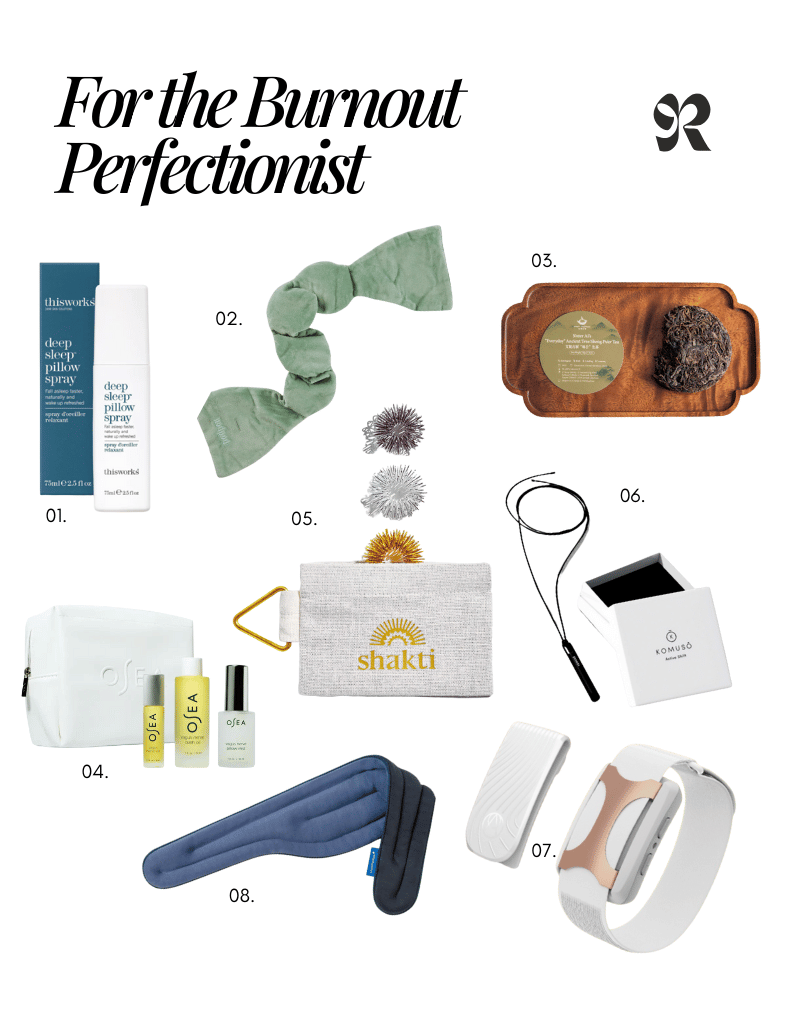
01. choose sleep kit / 02. Nodpod Weighted Sleep Mask / 03. Sister Ai’s Everyday Shou Pu’er / 04. Vagus Nerve Travel Set / 05. Shakti Acupressure ring / 06. Komuso Shift Breathing Necklace / 07. The Apollo Pod / 08. Ostrichpillow Heated Neck Wrap
For the Morning Overthinker
Some people wake up already negotiating with the day. The first hour becomes a string of micro-decisions that quietly exhaust capacity before the workday even begins.
A calm morning is not a mood. It is a system of defaults.
The Default Stack Method
This is a small design approach that turns a messy morning into a low-noise one.
Build a three-part set of defaults.
A simple weekday outfit formula reduces early decision load. A repeatable drink or breakfast anchor removes the first negotiating loop. An essentials landing spot prevents the last-minute scavenger hunt that often spikes anxiety.
Keep the standard deliberately modest.
The goal is not a perfect morning. The goal is stable function with fewer decisions.
The 90-Second Night-Before Reset
This is one of the highest return habits in the entire guide.
Set out tomorrow’s clothes in one place. Place the first morning item where it is easy to reach without thinking. Pre-load the one thing that tends to derail you, such as water or keys. This tiny preparation protects the next morning from becoming a mental obstacle course.
What usually goes wrong
Morning overthinkers try to solve mornings with a big new system. The fix is smaller. Choose the default that removes the most recurring friction and protect it.
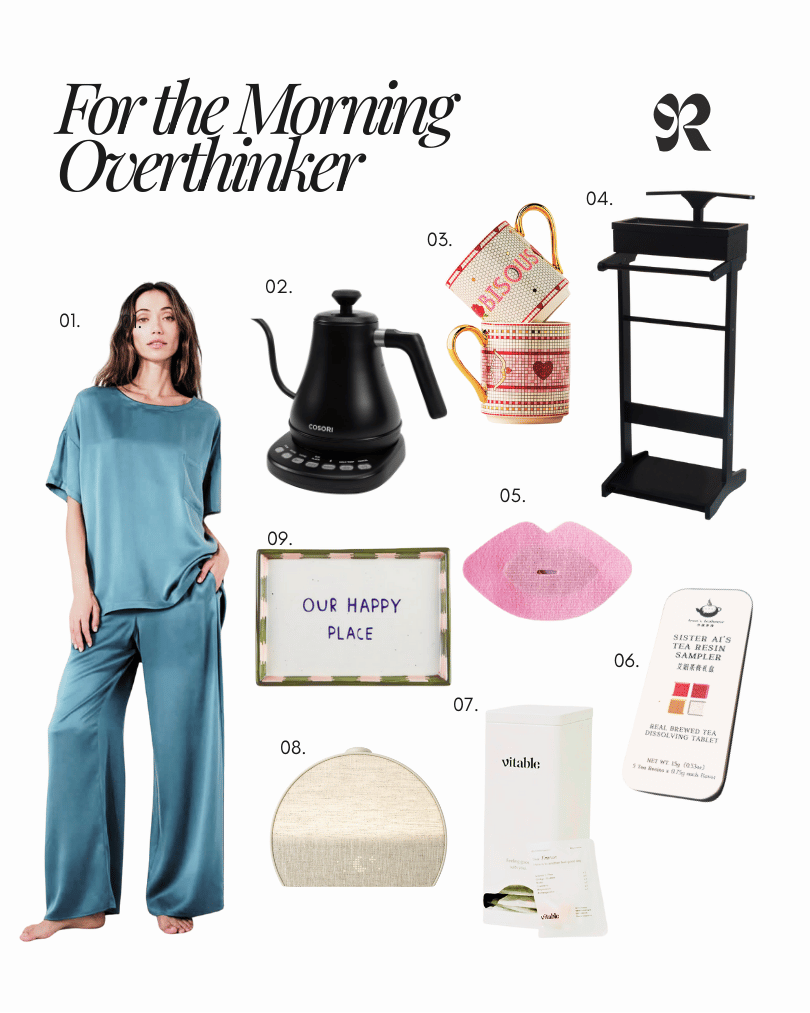
01. silk Lunya Washable Tee Pant Set / 02. Smart Electric Gooseneck Kettle / 03. The Bistro Tile Stoneware Mug / 04. Valet Stand with Tie Racks & Accessories Organisers / 05. Collagen mouth tape / 06. Tea Resin / 07. personalised vitamin pouches / 08. hatch restore 3 / 09. Our Happy Place Trinket Tray
For the Inbox Juggler
This person is not weak-willed. They are dealing with a device designed to capture attention during transitions. They open the phone to make a call and surface in a different app later.
The solution here is not banning technology. The solution is changing the environment so the intended behaviour is easier than the accidental one.
A visible timer does what good intentions cannot.
The Scroll-Proof Transition
Identify the two moments where distraction most often steals time. Calls and quick admin are common traps.
Replace one of these with a more single-purpose setup. This could be a dedicated calling option or a manual alternative that reduces app-hopping. The aim is not purity. The aim is fewer accidental 30-minute detours.
The Physical Time Boundary
A digital timer can be ignored. A physical timer changes behaviour because it sits in your field of vision. It makes time relational and tangible, which supports both attention and recovery.
A useful rule here is short caps on tasks that tend to expand. When time limits become visible, stopping feels cleaner.
The Screen-to-Body Swap
When attention frays, the nervous system wants input. A tactile object gives the hands a replacement and reduces the reflex to reach for the phone. This is a small intervention that often improves focus more than people expect, because it addresses the body’s need for grounding.
What usually goes wrong
People try to out-rule an attention machine. Architecture wins. Swap one key part of the environment and the behaviour follows.
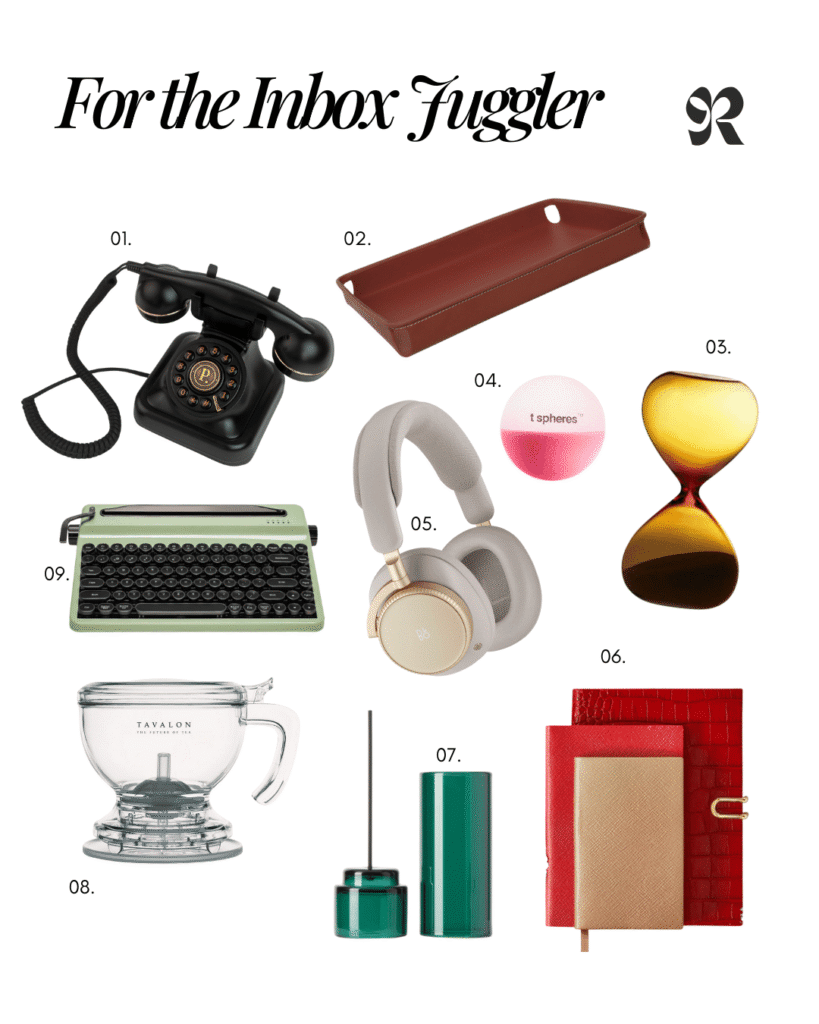
01. The Rotary Bluetooth phone / 02. Ørskov Letter Tray / 03. Hightide Hourglas / 04. self-massage massage geranium ball / 05. B&O Beoplay H100 headphones / 06.Soho Weekly Diary / 07. Study of Trees Incense Flue Set / 08. tavalon Gravity Teapot / 09. YUNZII wireless keyboard
For the Homebody with Taste
They already enjoy being home. The friction is whether home feels like intentional restoration or a collapse between obligations. Here, self-care is atmosphere with function.
Comfort sticks when it is beautiful enough to stay out.
The “Stay Out” Rule
If an object needs to be stored away, the habit quietly dies. Leave the most useful comfort items visible. This removes set-up steps, increases repeat use, and makes restoration feel like a choice rather than an emergency response.
This logic also applies to movement. When a beautiful piece can live in a room, it becomes a gentle daily nudge rather than another task.
The Ritual Signifier
A small, high-signal object can shift the meaning of an evening. This is not about constant luxury. It is about one deliberate cue that marks a different mode, especially for people who struggle to let a day end.
The Personal Care Marker
Personalised details can do real psychological work. A monogram or bespoke element turns comfort into permission. It quietly says this care is not generic, and it is allowed to be for you.
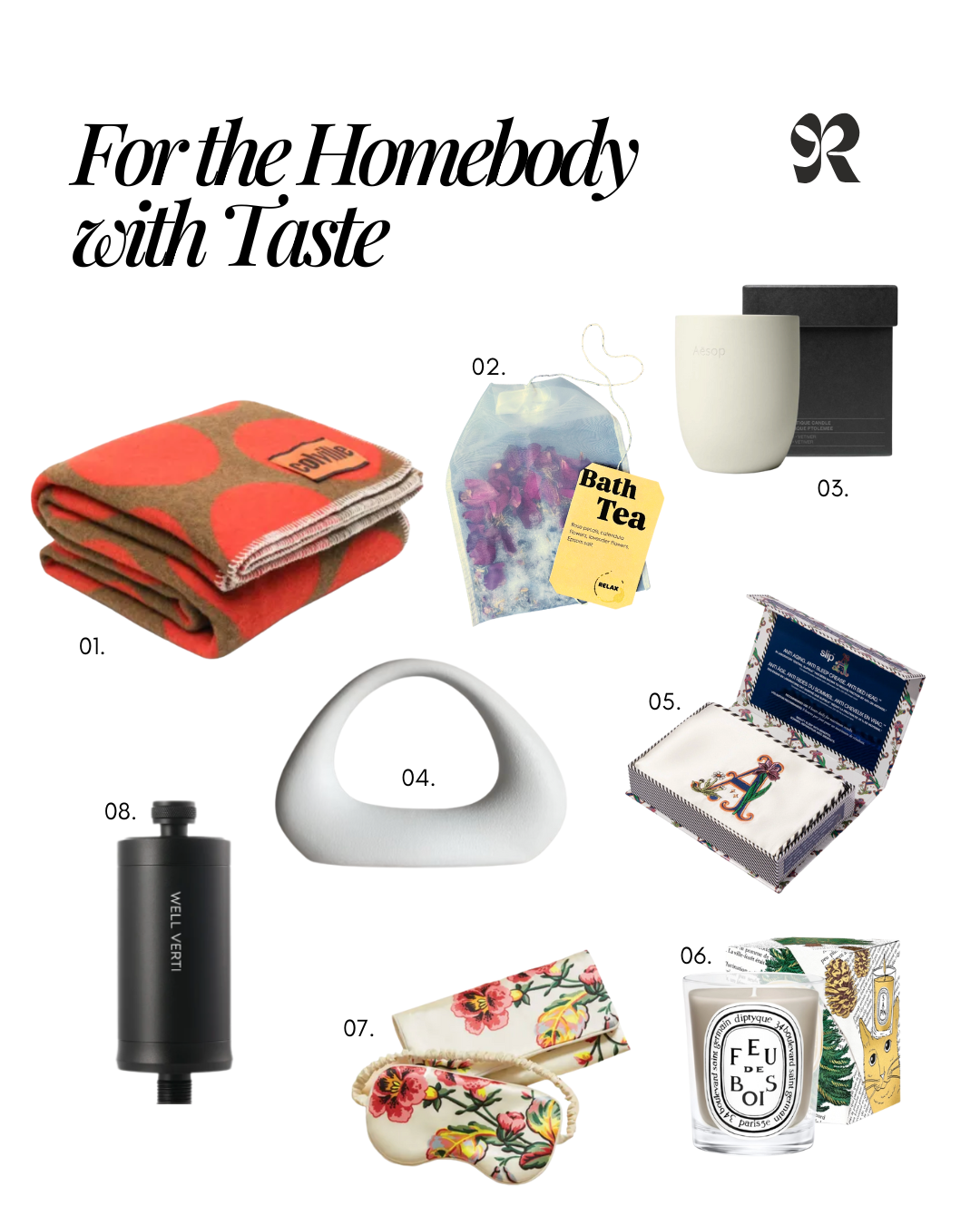
01. colville polka dot Blanket / 02. Bath Tea Bag/ 03. Aesop Ptolemy Aromatique Candle / 04. Aesthetic Kettlebell / 05. Slip Pillowcase Silk / 06. Diptique Feu de Bois / 07. Olivia von Halle Audrey Eye Mask / 08. Purified water shower filter
A one-minute choosing rule
Match the gift to the friction.
If they struggle to stop, choose a shutdown cue that does the thinking for them. If they struggle to start, choose something that stays out and reduces set-up. If the phone eats their attention, choose a manual or single-purpose upgrade that feels better to use.
You are not buying a trend. You are buying an easier week.